
In today’s hyper-connected digital economy, businesses are no longer confined by geographical borders. A brand based in Zirakpur can sell to a customer in Tokyo, a startup in Delhi can attract investors from San Francisco, and a service provider in Mumbai can acquire clients from Dubai — all organically, through strategic search engine optimization. This is the transformative power of International SEO.
Whether you are a growing e-commerce brand, a SaaS company, or a service-based business eyeing global expansion, understanding and implementing international SEO is no longer optional — it is imperative. In this comprehensive guide, we walk you through everything you need to know about international SEO, from its foundational principles to advanced implementation strategies.
“International SEO is the practice of optimizing your website so that search engines can identify which countries you want to target and which languages you use for business.” — Google Search Central
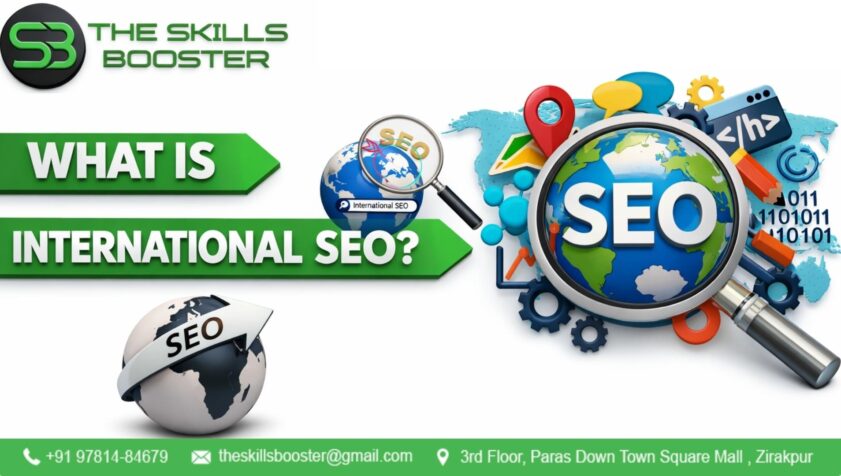
What Is International SEO?
International SEO refers to the process of optimizing your website so that it ranks well in search engines across multiple countries and languages. Unlike standard domestic SEO — which focuses on ranking within a single market — international SEO considers the unique search behavior, language nuances, cultural preferences, and regional algorithms that govern search results in different parts of the world.
At its core, international SEO operates across three primary dimensions: geo-targeting (telling search engines which countries your content is designed for), multilingual SEO (optimizing content in multiple languages to reach diverse audiences), and technical configuration (implementing hreflang tags, URL structures, and server settings to signal geographic intent to search engines).
When executed correctly, international SEO ensures that a user in France searching for your product sees your French-language page, while a user in Brazil encounters your Portuguese-optimized version — each receiving a tailored, relevant experience that increases the likelihood of conversion.
Why International SEO Matters for Modern Businesses
The global e-commerce market is projected to surpass $7 trillion by 2025. Cross-border digital trade is accelerating, driven by mobile internet penetration, digital payment infrastructure, and rising consumer confidence in online transactions. Against this backdrop, international SEO emerges as one of the highest-ROI digital marketing strategies available to businesses with global ambitions.
Tapping into Underserved Markets: Many emerging markets — particularly in Southeast Asia, Latin America, the Middle East, and Africa — are experiencing explosive internet growth but remain underserved by global brands. International SEO allows businesses to establish a strong organic presence in these markets before competitors arrive.
Reducing Customer Acquisition Costs: Organic search traffic from international markets, once established, is remarkably cost-effective compared to paid advertising. A well-optimized international SEO strategy generates compounding returns over time, unlike pay-per-click campaigns that stop delivering the moment budgets are paused.
Building Global Brand Authority: Ranking consistently across multiple markets signals to both users and search engines that your brand is a credible, authoritative source in its domain. This cross-market authority reinforces your overall domain strength and benefits your SEO performance holistically.
Language and Cultural Resonance: People overwhelmingly prefer to search, shop, and consume content in their native language. Research consistently shows that users are significantly more likely to make a purchase when content is presented in their first language. International SEO bridges this gap by aligning your content with the linguistic and cultural preferences of each target market.
Key Components of a Successful International SEO Strategy
Market and Keyword Research by Region
International SEO begins with rigorous, market-specific research. Keyword search behavior varies dramatically across regions — not just in language, but in search intent, terminology, and query structure. A thorough international keyword research process involves identifying high-volume, commercially relevant search terms in each target language, analyzing competitor landscapes within country-specific Google domains (such as google.fr, google.de, google.co.jp), understanding local colloquialisms and variant spellings, and mapping search intent to the appropriate stage of the buyer journey in each market.
URL Structure and Site Architecture
One of the most critical technical decisions in international SEO is how to structure your URLs. The three primary approaches are Country Code Top-Level Domains (ccTLDs) such as example.fr or example.de — which provide the strongest geo-targeting signal but require separate domain investment — subdirectories like example.com/fr/ — the most common approach that consolidates domain authority — and subdomains like fr.example.com, which offer moderate geo-targeting. For most businesses, subdirectories represent the optimal balance of geo-targeting effectiveness and domain authority consolidation.
Hreflang Tags: The Backbone of International SEO
The hreflang attribute is an HTML tag that communicates to search engines which language and regional version of a page should be displayed to users in specific locations. Correct hreflang implementation is arguably the most technical and critical aspect of international SEO. Hreflang must be implemented comprehensively — every alternate version of a page must reference all other versions, including itself, in a fully reciprocal linking structure. Errors in hreflang implementation are among the most common and costly mistakes in international SEO.
Multilingual Content Creation and Localization
There is a significant difference between translation and localization. Translation converts words from one language to another. Localization adapts your entire content experience — including tone, cultural references, date formats, currency, imagery, and calls-to-action — to align with the expectations and sensibilities of each target market. Effective international content localization requires native-language writers or professional localization specialists, market-specific editorial guidelines, culturally appropriate UX design, and locally relevant examples and case studies.
Technical SEO Considerations for Global Sites
Beyond hreflang, international SEO involves several additional technical considerations. Server location and CDN configuration affect both page speed and perceived geographic relevance. Structured data markup must be implemented consistently across all regional versions. XML sitemaps should be segmented by region or language to facilitate efficient crawling. Canonical tags must be carefully configured to prevent cross-language duplicate content issues. And Core Web Vitals performance must be monitored and optimized separately for each regional audience.
International Link Building
Domain authority in international markets is built through acquiring high-quality backlinks from locally relevant, authoritative websites. An effective international link-building strategy involves digital PR and media outreach in each target country, partnerships with local industry associations and publications, guest posting on regionally prominent blogs and portals, and adaptation of linkable asset content for each market.
Common International SEO Mistakes to Avoid
Even experienced SEO practitioners make costly errors when venturing into international optimization. Using machine translation without human review is one of the most widespread mistakes — automated tools produce content that is technically accurate but often culturally awkward or semantically incorrect. Ignoring hreflang entirely leads to search engines indexing the wrong regional version for users in specific markets. Serving identical English-language content for users in the UK, USA, Australia, and Canada without regional differentiation creates duplicate content issues and dilutes rankings. Directly translating keywords from one language to another without independent research produces suboptimal results. And neglecting to build local link profiles leaves significant ranking potential on the table.
International SEO vs. Multilingual SEO
These two terms are often used interchangeably but represent distinct strategies. Multilingual SEO refers specifically to optimizing content for multiple languages, regardless of geographic targeting. International SEO encompasses both geographic targeting and multilingual considerations, with an additional layer of technical and structural complexity. A business might implement multilingual SEO to serve both English and Spanish speakers within the United States, while international SEO would be required to target both the United States and Mexico as separate markets with their own search behaviors and competitive landscapes.
Measuring International SEO Success
Effective international SEO campaigns are measured through a combination of market-specific KPIs and overarching business metrics. Key performance indicators include organic search visibility by country and language in Google Search Console, keyword ranking positions across target international SERPs, organic traffic segmented by geographic region in Google Analytics, click-through rates by country, conversion rates segmented by market and language, and backlink acquisition from locally relevant domains. Regular international SEO audits — conducted at least quarterly — are essential to identify technical issues, monitor competitive movements, and ensure that content localization remains current and culturally relevant.
The Future of International SEO
The landscape of international SEO continues to evolve rapidly. Voice search optimization is becoming increasingly important as smart speaker adoption grows globally, requiring a focus on conversational, long-tail search queries in each target language. AI-powered search algorithms are growing more sophisticated in understanding semantic intent across languages, rewarding truly helpful, authoritative content over keyword-stuffed pages. Visual and video search are gaining prominence in markets like China, South Korea, and India, necessitating a broader, multimedia approach to international content strategy. And zero-click searches — where users obtain information directly from featured snippets and knowledge panels — are rising globally, making structured data implementation and E-E-A-T (Experience, Expertise, Authoritativeness, Trustworthiness) signals more critical than ever.
🎓 Master International SEO at The Skills Booster — Zirakpur’s Leading Digital Marketing Institute
Understanding international SEO conceptually is only half the battle. True mastery comes from hands-on practice, real-world campaign execution, and expert mentorship. That is precisely what The Skills Booster offers.
Widely recognized as one of the best digital marketing institutes in Zirakpur, Punjab, The Skills Booster delivers industry-aligned, practical training programs that equip students and professionals with the tools, frameworks, and real-world experience needed to excel in today’s competitive digital landscape.
Modules You Will Master at The Skills Booster:
International SEO & Technical SEO, Search Engine Optimization, Pay-Per-Click Advertising (Google Ads & Meta Ads), Social Media Marketing, Content Marketing Strategy, Email Marketing & Automation, Web Analytics (Google Analytics 4), E-Commerce Marketing, and Affiliate Marketing — all taught through live projects, real client campaigns, and mentorship from seasoned industry practitioners.
Rather than passive lectures and theoretical frameworks, training at The Skills Booster is built around real campaigns, industry tools, and the professional guidance needed to drive measurable results from day one. Students graduate not just with certificates, but with portfolios, proven competencies, and the confidence to compete in international digital markets.
“At The Skills Booster, we don’t just teach digital marketing — we build digital marketers who are ready to compete and win in real-world scenarios, including complex international markets.”
Visit The Skills Booster: 🌐 Website: www.theskillsbooster.com
📍 Address: Paras Downtown Square Mall, Cabin No. 2, 3rd Floor, Zirakpur, Punjab — 140603
📞 Phone: +91 97814 84679
Conclusion
International SEO is not a one-time project — it is an ongoing, evolving discipline that requires continuous research, iteration, technical vigilance, and cultural sensitivity. The businesses that invest in building robust international organic search presences today will be the dominant global brands of tomorrow.
Whether you are just beginning to explore global expansion or seeking to optimize an existing international digital presence, the principles outlined in this guide provide a comprehensive roadmap for sustainable, scalable international SEO success.
And if you are ready to take your digital marketing expertise to the next level — mastering not just international SEO, but the full spectrum of modern digital marketing disciplines — The Skills Booster in Zirakpur is the ideal place to begin your journey.
Your global audience is searching. Make sure they find you.